5 Reasons Drivers Fail DOT Physicals (And How to Fix Them)
High blood pressure, sleep apnea, vision problems, diabetes complications, and certain medications are behind most DOT physical failures. Here's what to know.
What drivers most often miss: Most DOT physical failures come down to five issues: uncontrolled high blood pressure, untreated or undisclosed sleep apnea, vision that doesn't hit 20/40, diabetes complications, and medications that disqualify you from driving. All five are either preventable or manageable with the right preparation.
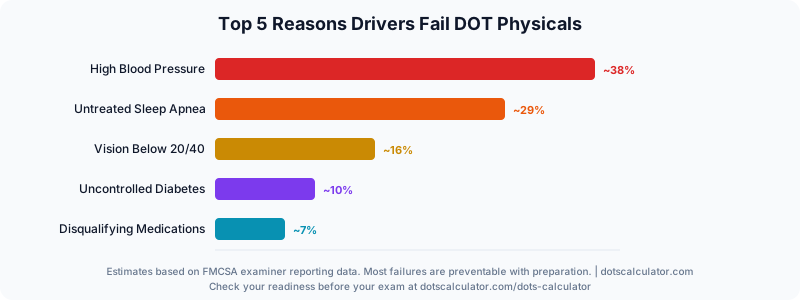
The DOT physical isn't designed to catch drivers off guard. The standards in 49 CFR 391.41 are public, they haven't changed dramatically in years, and most of the criteria are things you can check at home before you ever walk into the clinic. Still, thousands of drivers either fail outright or come out with a shortened certificate every year, usually for one of these five reasons.
Let's go through each one, explain exactly where the lines are, and talk about what you can actually do about it.
1. Uncontrolled High Blood Pressure
This is the number one reason drivers don't get a 2-year certificate. Blood pressure is checked at every DOT physical, and the FMCSA tiers are strict.
Here's where the cutoffs sit:
| Blood Pressure | Certification |
|---|---|
| Below 140/90 | 2-year certificate |
| 140–159 / 90–99 | 1-year certificate |
| 160–179 / 100–109 | 90-day certificate |
| 180+ / 110+ | Disqualified |
A reading of 179/109 gets you a 90-day card. A reading of 180/110 gets you nothing until your BP is controlled. That's a one-point swing that grounds you.
Why it happens: Most drivers running high BP either don't know their numbers, haven't been on medication, or are on medication that isn't working well enough. White-coat anxiety, BP spiking in a clinical setting, is real but usually adds only 5–10 mmHg, not enough to push truly controlled BP into a disqualifying range.
What to fix it: Get a home cuff and start checking your readings a month before your exam. If you're consistently above 140/90, talk to your doctor about whether a medication adjustment makes sense. Cut sodium, cut alcohol, and add even 20 minutes of daily walking, the American Heart Association says that alone can drop systolic pressure by 4–9 mmHg over 4–8 weeks.
Don't walk in blind. Use the DOT physical eligibility tool to check which certification tier your current BP puts you in. Knowing your category in advance means no surprises in the exam room.
For specific strategies to get your reading down before exam day, read our full guide on lowering blood pressure for your DOT physical.
2. Sleep Apnea, Untreated or Undisclosed
Sleep apnea has become a significant focus area for FMCSA and NRCME examiners in recent years. It's not officially a disqualifying condition by itself, but an examiner can refuse to certify you, or certify you for a shorter period, if they believe untreated sleep apnea creates a safety risk.
The concern is real: untreated sleep apnea significantly raises the risk of drowsy driving and microsleep events. For a driver running 500+ miles a day, that's not a small risk.
What triggers a referral: Examiners screen for sleep apnea risk factors during the physical. The big ones:
- BMI over 35
- Neck circumference over 17 inches (men) or 16 inches (women)
- Reported snoring or observed gasping during sleep
- Daytime sleepiness or fatigue
- History of high blood pressure (often comorbid with sleep apnea)
If you check multiple boxes, expect the examiner to ask about sleep quality. If they feel your risk is high enough, they may require a sleep study before certifying you.
The undisclosed problem: Some drivers with a known diagnosis try not to mention it, figuring the examiner won't know. This is a bad idea. The medical history form (MCSA-5875) is a federal document. Falsifying it is a federal offense. If an accident later reveals an undisclosed condition, the legal exposure is significant.
What to do if you have a diagnosis: Use your CPAP. Examiners require documented compliance, at least 70% nightly use over the past 30 days. Download a report from your machine's app (ResMed myAir, Philips DreamMapper, or similar) and bring it to the exam. A compliant sleep apnea patient with good CPAP data usually gets certified without issues.
If you're borderline on risk factors but haven't been diagnosed, a sleep study proactively done before the physical lets you address it on your terms rather than the examiner's.
3. Vision Below 20/40
The vision standard under 49 CFR 391.41(b)(10) requires:
- Distance visual acuity of at least 20/40 in each eye, corrected or uncorrected
- Peripheral field of at least 70 degrees in the horizontal meridian in each eye
- Ability to distinguish traffic signal colors (red, green, amber)
Most drivers who fail vision do so because their prescription is outdated. They come in wearing glasses or contacts that don't fully correct their vision anymore, test at 20/60 or 20/80, and leave without a certificate.
The math: If you're 20/80 uncorrected but 20/25 corrected, you pass, assuming you wear your correction while driving, and the examiner will annotate your certificate to require corrective lenses. If your corrected vision is still below 20/40 because your prescription hasn't been updated in four years, you don't pass.
What to do: See your eye doctor 4–6 weeks before your DOT physical. If your prescription has changed, get new lenses before the exam. This is one of the more fixable failure modes, it's almost entirely a scheduling problem.
Monocular vision (one functional eye) is a disqualifying condition under the standard physical. However, FMCSA has a Skill Performance Evaluation (SPE) certificate program that allows monocular drivers to apply for an exemption. It requires demonstration of safe driving ability and is evaluated case-by-case.
Color blindness is usually not disqualifying on its own, the standard is the ability to recognize traffic signal colors, not perfect color discrimination. Many color-blind drivers pass this portion of the exam.
4. Diabetes Complications
Diabetes itself doesn't automatically disqualify you from commercial driving, but complications and insulin use are a different story.
Under 49 CFR 391.41(b)(3), a driver must have no established diagnosis of diabetes mellitus currently requiring insulin for control, unless they hold an FMCSA diabetes exemption. That exemption requires application, documentation from your endocrinologist, and at least 3 months of stable insulin use with blood glucose logs.
Drivers on oral medications only (metformin, GLP-1 agonists, SGLT2 inhibitors) typically have no issue, the examiner just documents the condition and medication, and certifies you as normal.
Where complications become the problem: Even for drivers not on insulin, the examiner checks for diabetes-related complications that could affect safe driving:
- Peripheral neuropathy: Loss of feeling in the feet and hands affects vehicle control. The examiner will check sensation in your extremities.
- Retinopathy: Diabetic eye disease that affects vision acuity or visual fields, both of which are tested during the physical.
- Hypoglycemia episodes: A history of hypoglycemia unawareness (not feeling low blood sugar coming on) is a significant safety concern. Examiners take this seriously.
What to do: Keep your HbA1c in range, most examiners are comfortable certifying drivers with HbA1c below 10%, with lower being better for longer certification periods. If you have complications, bring documentation from your treating physician that addresses each one specifically and affirms your ability to drive safely.
If you're on insulin, start the FMCSA exemption application at least 3–4 months before your medical card expires. Don't wait, the process takes time, and driving while the exemption is pending requires a current valid certificate.
Read our detailed post on diabetes and the DOT physical for the full breakdown of the exemption process.
5. Disqualifying Medications
This one catches a lot of drivers off guard. The medication itself, not just the underlying condition, can be a disqualifying factor.
FMCSA's Medical Examiner Handbook lists medications that require careful evaluation or result in disqualification. The most common categories that come up:
Opioid pain medications: Prescribed opioids for chronic pain are generally disqualifying while being actively taken. FMCSA's guidance is that drivers on chronic opioid therapy cannot safely operate a CMV. This applies even to lower-dose prescriptions.
Methadone: Disqualifying. Even when prescribed for pain management or opioid dependence treatment.
Anti-seizure medications: If you're taking these, you likely had a seizure at some point. Under 49 CFR 391.41(b)(8), a seizure history typically requires being seizure-free for 10 years without medication to qualify for interstate driving. The medication is a flag; the underlying condition is the actual issue.
Certain sleep aids: Benzodiazepines and non-benzo sleep medications (zolpidem, eszopiclone) are generally disqualifying when taken regularly, due to residual sedation effects.
Insulin: See the diabetes section above, it requires an FMCSA exemption.
What to do: Bring a complete medication list to every DOT physical. Don't omit anything because you think it's unrelated, let the examiner make that call. If you're on a medication you're worried about, call FMCSA at 1-800-832-5660 before your exam. They can walk you through whether your specific medication is likely to be an issue.
In some cases, working with your doctor to switch to a non-disqualifying alternative medication is possible. That's a conversation worth having 2–3 months before your exam, not the week before.
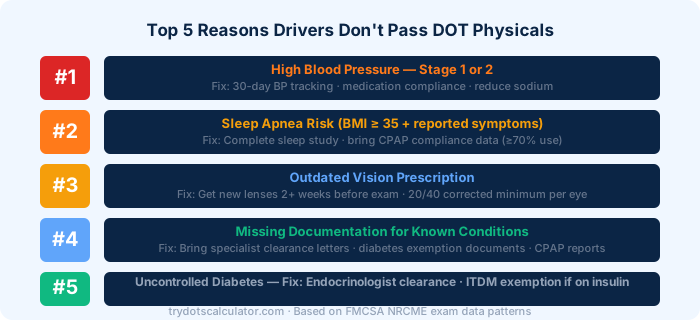
Putting It Together Before Your Exam
Four of these five failure reasons are things you can check before you sit down with an examiner. Your blood pressure is measurable at home. Your vision can be checked by your optometrist. Your diabetes numbers are in your lab results. Your medication list is in front of you right now.
Sleep apnea is trickier because you may not know you have it, but if your BMI is over 35, your neck is thick, and your spouse says you snore like a freight train, you're a candidate. Getting screened proactively beats getting blindsided at the physical.
Before your next appointment, run your numbers through the FMCSA medical standards checker. It maps your blood pressure, BMI, and other inputs against the actual FMCSA thresholds from 49 CFR 391.41 and tells you where you stand on each criterion. Takes about a minute.
For a full walkthrough of how to prepare in the 30 days before your exam, read our DOT physical preparation guide. And if you want to understand which conditions are hard disqualifications versus which ones can be worked around, check out our post on DOT disqualifying conditions.
Most DOT physical failures aren't surprises, they're things the driver already knew about but hadn't addressed. You've got time to address them.