How to Lower Blood Pressure Before Your DOT Physical
High BP is the top reason CDL drivers get short-term certs or fail outright. Here's a realistic 30-day plan to get your numbers where they need to be.
Quick Answer: You can meaningfully lower blood pressure in 30 days through diet, exercise, sleep, and medication adjustments, but you need to start now, not the week before your exam. Aim for below 140/90 for a 2-year card.
What You're Actually Working Against
Before we get into tactics, let's be honest about what blood pressure is. It's the force your heart exerts against your artery walls. Elevated readings mean your heart is working harder than it should, and your arteries may be stiffening over time. This is why the FMCSA takes it seriously, not to give truckers grief, but because uncontrolled hypertension significantly raises the risk of stroke and heart attack. Behind the wheel of a loaded semi, that's a public safety issue.
The FMCSA thresholds under 49 CFR 391.41:
- Below 140/90 → 2-year certificate
- 140–159 / 90–99 → 1-year certificate
- 160–179 / 100–109 → 90-day temporary certificate
- 180/110 or above → disqualified
If you're reading this, you're probably sitting somewhere in the 145–170 range and want to know what you can realistically do about it. The honest answer is: a lot, depending on how you're living right now. Use the DOT blood pressure calculator to check exactly which tier your current reading falls into.
The 30-Day Diet Changes That Actually Move the Needle
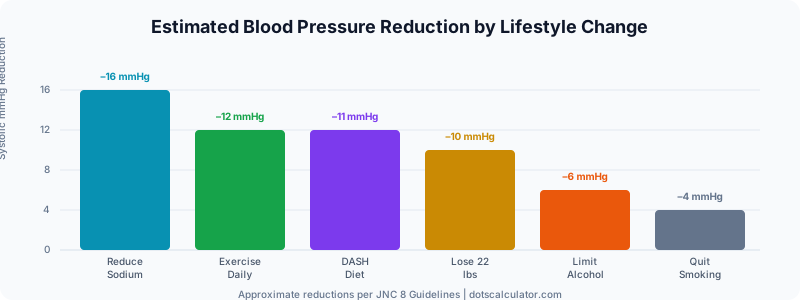
You don't need to become a health fanatic. You need to make specific, targeted changes that clinical research consistently shows reduce systolic blood pressure by 5–15 points in a few weeks.
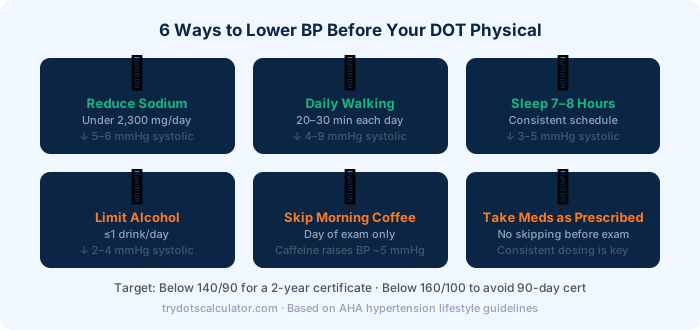
Cut sodium first. The average American eats about 3,400 mg of sodium per day. The DASH diet target is under 2,300 mg, with an ideal of 1,500 mg for people with hypertension. For drivers eating truck stop food regularly, this is where the biggest gains are. A single fast-food meal can have 1,500–2,500 mg of sodium alone.
Practical swaps: deli sandwiches instead of burgers, water instead of sports drinks (which are loaded with sodium), avoiding canned soups and ramen, and asking for sauces on the side. You don't have to eat salads every meal, just cut the highest-sodium items.
Add potassium. Potassium directly counteracts sodium's effect on blood pressure. Bananas are the classic example (422 mg each), but sweet potatoes (541 mg), avocado (485 mg per half), and canned beans (600–700 mg per cup) are all easy road-food options. Aim for 3,500–4,700 mg of potassium per day.
Cut back on alcohol. Alcohol raises blood pressure, and the effect is dose-dependent. If you're having three or more drinks per day, cutting to one or none can drop systolic pressure by 4–8 points within two weeks. For drivers on the fence about their BP, this one change can be the difference between a 1-year and a 2-year card.
Caffeine the morning of the exam. Caffeine temporarily raises blood pressure by 3–10 points for about an hour. You don't need to quit coffee, but skip it the morning of your physical. Have your last cup at least three hours before the exam.
Exercise: The Fastest Natural BP Reducer
Aerobic exercise lowers blood pressure faster than almost any other lifestyle change. The effect kicks in within a few sessions and compounds over weeks.
For drivers, the challenge is finding time to move when your job is sitting. Here's what works without requiring a gym membership:
30-minute walks, 5 days a week. That's it. Studies consistently show this drops resting systolic pressure by 4–9 points over 4–6 weeks. Park at the back of the lot at truck stops. Walk a loop around the rest area. Set a timer and walk for 15 minutes in each direction.
Resistance training, 2–3 days a week. Even bodyweight squats, push-ups, and planks, done at a moderate intensity, show measurable BP reductions in clinical trials. If you have access to a gym or carry resistance bands, even better. You don't need to lift heavy; you need consistent effort over multiple weeks.
Start 30 days before your exam. If your exam is in two weeks, exercise will still help, but the full effect takes a month. If you have 30 days, use all of them.
Sleep: The Variable Most Drivers Ignore
Short sleep duration and poor sleep quality are both independent risk factors for hypertension. Drivers regularly sleeping under 6 hours have measurably higher average blood pressure than those sleeping 7–8 hours.
If you have untreated sleep apnea, this is even more important. Obstructive sleep apnea causes BP spikes throughout the night and contributes to daytime hypertension that's difficult to control with medication alone. Starting CPAP therapy can lower systolic pressure by 5–10 points in many patients.
DOT examiners screen for sleep apnea when they see elevated BP paired with other risk factors, high BMI, large neck circumference, reports of snoring or daytime sleepiness. Getting evaluated for sleep apnea before your exam isn't just about BP; it prevents a deferral.
Medication: Timing, Adjustments, and What Not to Do
If you're already on blood pressure medication, there are right and wrong ways to handle the weeks before your exam.
Take your medication exactly as prescribed. Do not skip doses. Do not double up the day before the exam thinking you'll get a lower reading. Skipping doses causes rebound hypertension, your BP can spike even higher than baseline. Doubling up can cause dangerous drops and side effects. Neither of these is a strategy; they're gambles that frequently backfire.
Talk to your doctor 3–4 weeks before your exam. If your medication isn't keeping your BP below 140/90, this is the time to have that conversation, not 48 hours before the appointment. Adjusting a dose or adding a second agent takes 2–4 weeks to show its full effect. ACE inhibitors, ARBs, calcium channel blockers, and thiazide diuretics all have different onset profiles.
Bring your full medication list to the exam. Every medication, every dose, and the condition it's treating. Some drivers are hesitant to disclose this, but the examiner needs to know. Being on antihypertensive medication is not a disqualifier, having uncontrolled hypertension is.
If your doctor is willing to write a brief letter noting your diagnosis and current treatment plan, bring that too. It gives the examiner context if your reading is borderline.
White Coat Hypertension: It's Real, and It's Common
White coat hypertension refers to elevated BP readings in clinical settings that don't reflect your typical at-home levels. Studies estimate 15–30% of people experience some degree of it. For CDL drivers whose careers depend on the exam-day reading, this can matter a lot.
Signs you might have white coat hypertension:
- Home readings consistently below 135/85
- Exam readings consistently in the 145–160 range
- History of anxiety around medical appointments
- The number normalizes quickly after the exam ends
The FMCSA doesn't have a formal protocol for white coat hypertension, and examiners aren't required to take home readings into account. But most NRCME-certified examiners will:
- Take two readings with 5–10 minutes between them and use the lower one
- Allow you to sit quietly for a few minutes before measurement
- Let you disclose home readings as supporting context
A home blood pressure cuff ($25–50 at any pharmacy) lets you document your readings over several weeks. Bring a log of 20–30 readings to your exam. The examiner may not use them, but they provide context if your exam reading is borderline.
The Day Before and Day Of: Don't Undo Your Progress
You've spent three weeks eating better and walking every day. Don't blow it in the last 24 hours.
The night before:
- Eat a low-sodium dinner, avoid anything heavily processed or restaurant-heavy
- Get 7–8 hours of sleep
- Limit alcohol to zero
- Don't eat anything after 10 PM if you're doing fasting bloodwork
Morning of:
- Skip caffeine entirely, or have it at least 3 hours before the exam
- Don't rush, elevated stress before the exam raises your reading
- Take your regular BP medication at its normal time (if you usually take it in the morning, take it that morning)
- Use the bathroom before the BP cuff goes on, a full bladder adds 10–15 points to systolic readings
- Arrive 10 minutes early and sit quietly in the waiting room
At the exam:
- Tell the examiner if you're nervous
- Breathe slowly during the cuff inflation
- Ask to rest and retake if the first reading is high, most examiners will accommodate this
What to Do If You're Still in the Danger Zone
If you've done the work and you're still reading 155/98 or 165/104, it's better to postpone the exam than to walk in knowing you'll get a short-term card or fail outright.
A 90-day card is not the end of the world, but it puts you on a tight clock. If you think you're close but not there yet, get your doctor involved immediately. A medication adjustment at 6 weeks out is much better than a 90-day cert and the scramble that follows.
Check your current numbers against the FMCSA blood pressure thresholds to see exactly how far you are from the 2-year or 1-year cutoff. A 5-point drop moves a lot of drivers from one category to another.
For the full picture of everything that gets checked, not just BP, read the DOT physical preparation guide and the breakdown of why drivers fail their DOT physical.
Keeping It Down Long-Term
Passing this exam is the immediate goal. But if your BP is regularly in the 145–165 range, you're managing a chronic health condition, not just a compliance issue. The lifestyle changes in this post, sodium reduction, exercise, sleep, and weight management, work long-term, not just in the weeks before an exam.
Drivers who take the BP issue seriously between exams typically get their 2-year card back at their next physical and keep it. Drivers who treat it as an every-two-years problem tend to be in the same spot, or worse, every time they sit down with an examiner. Start working on it today.