DOT Physical Disqualifying Conditions: What Will Fail You
Some conditions automatically disqualify you from a DOT physical. Others only fail you depending on severity. Know the difference before your exam.
Quick Answer: Certain conditions, like uncontrolled epilepsy, vision below 20/40, blood pressure at 180/110 or above, and insulin-dependent diabetes without an FMCSA exemption, automatically disqualify you. Many others depend on severity and documentation.
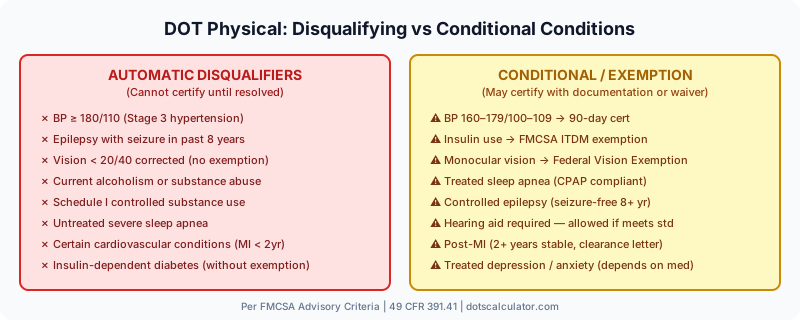
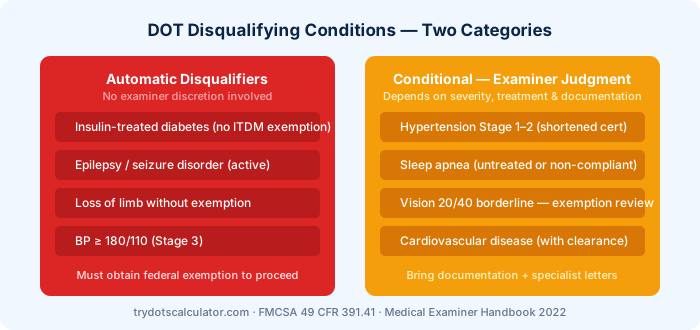
Automatic Disqualifiers vs. Conditional Disqualifiers
Before diving into the list, it helps to understand the two categories. Some conditions are automatic, if you have them without a specific waiver or exemption, there's no discretion involved. The examiner can't pass you. Others are conditional, they can disqualify you, but whether they do depends on severity, treatment history, documentation, and sometimes a specialist's sign-off.
The FMCSA lays this out in 49 CFR 391.41, which lists the physical qualifications required to operate a commercial motor vehicle. That regulation has been on the books since 1970, though it's been updated several times. The FMCSA Medical Examiner Handbook fills in the clinical details on how examiners apply those standards.
Run your key numbers through the DOT physical eligibility checker to see where you stand before you sit down with an examiner.
Automatic Disqualifiers: The Hard Stops
These conditions disqualify you outright under federal regulations. In most cases, no examiner on the National Registry can certify you unless a specific federal exemption or waiver applies.
Blood pressure at or above 180/110
This is the most common automatic disqualifier examiners encounter. At this level, Stage 3 hypertension in FMCSA terms, no certificate can be issued. It's not permanent; once you get your pressure consistently below 160/100 with documented treatment, you can return for re-examination. But on the day of the exam, a reading of 182/112 means no card.
Epilepsy or a seizure disorder without a waiver
Federal regulations bar drivers from CDL certification if they have a current clinical diagnosis of epilepsy or a condition that's likely to cause a loss of consciousness. There's a seizure-free requirement, and drivers who've had a single unprovoked seizure or a seizure secondary to a brain tumor typically can't be certified without going through the FMCSA exemption process.
Insulin-dependent diabetes without the FMCSA ITDM exemption
Under 49 CFR 391.41(b)(3), insulin-treated diabetes has historically been a disqualifier for interstate commerce. The ITDM Exemption Program exists for drivers who qualify, but you have to apply and receive approval before your exam. Without that exemption document in hand, the examiner cannot certify you. See the full breakdown in diabetes and DOT physicals.
Vision below 20/40 in either eye
The FMCSA requires 20/40 or better in each eye individually, with or without correction, plus at least 70 degrees peripheral vision in the horizontal meridian in each eye. A driver whose vision in one eye is 20/100 even with glasses doesn't pass, regardless of how good the other eye is. An ophthalmologist's report is required if the examiner can't confirm vision meets standards in-office.
Hearing loss exceeding the threshold
The standard is being able to hear a forced whispered voice at five feet or more, in at least one ear, with or without a hearing aid. If you can't meet that with correction, you don't qualify. Audiometric testing showing a hearing level in the better ear exceeding 40 decibels (averaged across 500 Hz, 1000 Hz, and 2000 Hz) also disqualifies.
Color vision, mostly not a disqualifier, but one nuance
Contrary to common belief, color blindness itself doesn't disqualify you. The standard is the ability to recognize traffic signals and signal lights. Most drivers with red-green color deficiency can still distinguish signal positions and pass. Only severe total color blindness that prevents signal recognition is a problem.
No perceivable foot function or limb loss without an SPE certificate
Drivers who are missing a limb or have significant impairment affecting their ability to operate vehicle controls can apply for a Skill Performance Evaluation (SPE) certificate. Without one, loss of a foot, leg, hand, or arm is disqualifying. With an SPE on file, many drivers continue working. This isn't the same as a typical CDL waiver, it involves a road test evaluated by an FMCSA-authorized evaluator.
Conditions That May Disqualify: It Depends
These conditions show up in the examiner's assessment, but whether they disqualify you depends on specifics, how severe the condition is, whether it's controlled, and in some cases whether a specialist has cleared you.
Cardiovascular disease
A history of coronary artery disease, heart attack, or bypass surgery doesn't automatically end your CDL career, but it does require additional scrutiny. Examiners are guided by FMCSA's cardiovascular advisory criteria, and drivers with significant cardiac history often need clearance from a cardiologist. The key question is whether you're at increased risk for sudden incapacitation behind the wheel.
Conditions that tend to disqualify without additional clearance: symptomatic cardiac arrhythmia, uncontrolled congestive heart failure, documented ischemic events within the past 12 months. Conditions that may not, with proper documentation: stable angina managed medically, history of MI with good ejection fraction and documented cardiology follow-up.
Sleep apnea
Obstructive sleep apnea isn't listed as an automatic disqualifier in the regulations, but examiners are trained to identify it, and untreated severe OSA is considered a disqualifying condition under general health standards. If an examiner suspects significant OSA, they can defer certification pending a sleep study. Diagnosed OSA with documented CPAP compliance typically results in certification, often a 1-year card initially.
Mental health conditions
This one gets handled carefully. A current clinical diagnosis of a mental health condition that affects judgment, behavior, or situational awareness can disqualify a driver. That includes active psychosis, severe major depression, and certain personality disorders with documented impairment. However, well-controlled conditions with stable medication and no episodes affecting function often don't disqualify drivers. The examiner's job is to determine whether there's current functional impairment.
Musculoskeletal conditions
Back problems, arthritis, or other conditions affecting your ability to safely operate the vehicle come down to function. Can you safely perform the physical tasks associated with driving a CMV? If pain or limited range of motion creates a safety risk, for example, you can't turn your head far enough for required mirror checks, the examiner will note it. Functional testing or a specialist's assessment may be required.
Certain medications
No drug automatically disqualifies you, but some medications the FMCSA considers potentially disqualifying include Schedule II controlled substances (without a documented medical necessity evaluation), anticoagulants in certain dosages, and methadone. The examiner evaluates the underlying condition being treated, the drug's effects, and whether those effects are compatible with safe driving.
What Happens If You're on the Borderline
A lot of drivers fall into gray areas. Your blood pressure is 158/96, high, but not disqualifying. Your A1C is 9.2 and you're on oral medication. You had a cardiac stent placed 18 months ago.
In these cases, the examiner has latitude. They can request specialist documentation before issuing a certificate, issue a shorter-duration certificate with instructions to return, or defer you pending additional evaluation.
The right move when you're in a gray area is to come prepared. Bring a letter from your specialist, your recent lab work, your medication list, and a clear statement that your condition is stable. Examiners deal with incomplete files constantly, walk in with a complete one and you're already ahead.
The DOT physical preparation guide covers exactly how to document borderline conditions before your exam.
What the Examiner Can and Can't Do
National Registry Certified Medical Examiners (NRCMEs) are trained and tested by FMCSA on these standards, but they do have some discretion in applying them. What they can't do:
- Issue a certificate to someone who has a blood pressure reading above 180/110
- Certify an insulin-dependent driver without a valid FMCSA ITDM exemption on file
- Ignore a documented seizure disorder without a federal waiver
- Certify someone with vision below the statutory minimum
What they can do:
- Request additional documentation and defer the decision
- Issue shorter-duration certificates when monitoring is warranted
- Accept specialist clearance letters when conditions are borderline
- Use clinical judgment on conditions the regulations don't enumerate explicitly
If you believe an examiner incorrectly disqualified you, you can seek a second opinion from another NRCME. You can also contact the FMCSA directly, though that process is slower.
Running Your Numbers First
The most avoidable failures at DOT physicals come from drivers who walk in without knowing where their numbers stand. Blood pressure is the biggest one, thousands of drivers show up with uncontrolled hypertension they haven't addressed because they didn't know it was a problem.
Use the CDL health readiness checker before your exam. Enter your blood pressure, height, weight, and vision status to see which disqualifying or limiting thresholds apply to your situation. It won't catch everything, but it'll tell you whether your BP is in the automatic-disqualification zone, the 90-day zone, or the clear zone, before you spend time and money on an exam you're not ready to pass.
All thresholds in this guide trace back to 49 CFR 391.41 and the FMCSA Medical Examiner Handbook. If a condition you are dealing with is not covered here, the Medical Advisory Criteria at fmcsa.dot.gov are public and worth reading before your exam.
Don't show up hoping for the best. The standards are published. Know them, address what you can, and document the rest.