DOT Medical Certificate Periods: 2-Year, 1-Year, and 90-Day Explained
Your DOT card length depends on your health. Two years is the standard, but blood pressure and other conditions can shorten it to 1 year or 90 days.
In short: A standard DOT medical certificate lasts 2 years. High blood pressure or other monitored conditions can shorten that to 1 year or 90 days. Knowing which category you fall into lets you plan ahead instead of getting caught off guard.
Why Certificate Length Is Determined by Health, Not Just Time
The FMCSA doesn't issue every driver the same card. The length of your medical certificate reflects how closely your health needs to be monitored. A driver with textbook blood pressure, clear vision, and no chronic conditions gets the full two years. A driver with borderline hypertension gets a shorter window, not as a punishment, but because the regulations require more frequent checks for conditions that can change quickly.
This matters in practical terms. A 90-day card isn't just inconvenient, it can affect dispatch schedules, load assignments, and your employment status if it expires mid-contract. Knowing exactly which tier you fall into, and why, puts you in control of the situation.
Run your blood pressure and other stats through the DOT physical readiness calculator before your exam to see which certification period you're likely to receive.
The 2-Year Certificate: Standard and Straightforward
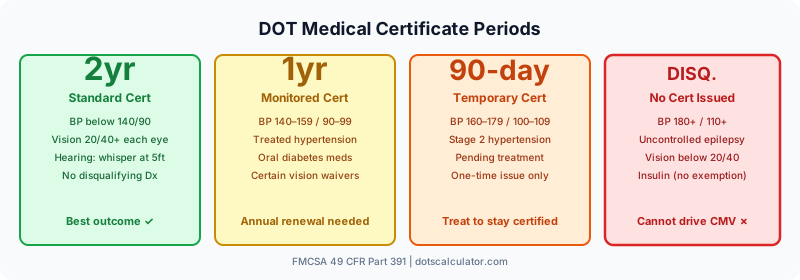
Two years is what most drivers shoot for and most healthy drivers receive. Under 49 CFR 391.41, a 2-year certificate requires:
- Blood pressure below 140/90
- Vision of 20/40 or better in each eye (with or without correction)
- Hearing that meets the whisper test at 5 feet
- No disqualifying conditions (uncontrolled epilepsy, severe cardiac disease, etc.)
- No insulin-dependent diabetes without an active FMCSA exemption
If all of those boxes are checked, you walk out with a card dated two years from your exam date. You don't need to come back until then, assuming your health stays stable.
What this means day-to-day: you renew every two years, keep your card on file with your employer, and that's mostly it. Some companies require you to carry it physically; others keep a copy in your driver file. Check your carrier's policy.
The 1-Year Certificate: Stage 1 Hypertension and Monitored Conditions
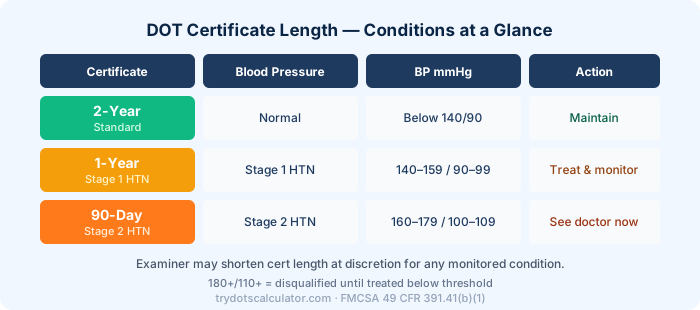
A 1-year certificate is issued when your blood pressure falls in the Stage 1 range, systolic 140–159 or diastolic 90–99, or when you have another condition that needs annual monitoring.
At this level, the FMCSA isn't disqualifying you. They're saying: come back in 12 months and show us you've got this under control. If your next exam shows your pressure is below 140/90, you can step up to a 2-year card. If it's still in the 140–159/90–99 range, you get another 1-year card. If it's crept up higher, you're looking at a 90-day card or worse.
Other conditions that often result in 1-year certificates include:
- Controlled sleep apnea with documented CPAP compliance
- Certain cardiac conditions that have been evaluated and cleared by a cardiologist
- Recent surgery or medical events where the examiner wants to confirm long-term stability
- Diet-controlled or oral-medication diabetes with A1C in acceptable range but with complicating factors
The practical impact of a 1-year card isn't just the renewal hassle, it can affect your CDL in certain states. Some states won't issue or renew a CDL if your medical card expires within a certain window. Check with your state DMV on their specific rules.
Read how to prepare for your DOT physical to understand what you can do in the weeks before your exam to push your numbers into the 2-year range.
The 90-Day Certificate: Stage 2 Hypertension
A 90-day certificate is issued when your blood pressure reads systolic 160–179 or diastolic 100–109 at the time of exam. This is Stage 2 hypertension under FMCSA guidelines, and it's a serious but still-drivable situation.
The 90-day card is specifically designed to give you time to get treatment started or adjusted and come back with better numbers. If you return after 90 days and your blood pressure is now below 140/90, you can get a 1-year or 2-year card. The FMCSA doesn't penalize you for the 90-day period as long as you address the problem.
Here's what the 90-day period means in real life:
- You're legally certified to drive for those 90 days
- You need to get into a doctor's office immediately and start or adjust blood pressure treatment
- Your employer will likely be notified (your medical card expiration date is on the certificate)
- If you don't address it and show up at 90 days with the same numbers or worse, you're looking at disqualification
Ninety days goes fast. Drivers who wait until day 80 to see a doctor often can't get their blood pressure under control in time. If you receive a 90-day card, treat it like a fire drill, get moving that same week. See what FMCSA considers disqualifying so you understand exactly what you're working against.
Disqualification: When Blood Pressure Is Too High to Drive
If your blood pressure measures 180/110 or higher at the time of your DOT physical, you don't get any card. You're disqualified, temporarily, in most cases, but disqualified.
This doesn't mean your career is over. It means you cannot operate a commercial motor vehicle until you bring your blood pressure under control and pass a physical. There's no 90-day grace period at this level because the stroke and cardiac event risk is considered too high to certify.
The path back from disqualification starts with your primary care physician. Get on medication, follow up regularly, and once your pressure is consistently in an acceptable range, schedule a new DOT physical. Depending on how quickly your body responds to treatment, some drivers return to driving within 30 to 60 days. Others take longer.
Conditions Beyond Blood Pressure That Affect Certificate Length
Blood pressure is the most common reason drivers get shorter certificates, but it's not the only one. Several other conditions routinely result in 1-year or shorter certifications:
Sleep apnea, If you're diagnosed with obstructive sleep apnea and prescribed CPAP therapy, most examiners will issue a 1-year certificate initially. Once you can document 12 months of CPAP compliance (typically via data downloaded from the device), many will extend you to 2 years.
Vision with correction, Drivers who are 20/40 or better only with corrective lenses are typically certified for the full period, but the examiner notes the requirement to wear lenses. If your vision is borderline and you're not sure whether you'll pass, get an eye exam first.
Cardiac clearance, Drivers with a history of heart disease, arrhythmias, or recent cardiac events often need additional clearance from a cardiologist and may receive shorter certificates depending on the nature and severity of the condition.
Monitoring requirements, Some examiners note specific conditions on the certificate and request follow-up. Read what's on your card carefully, it tells you exactly what's being monitored and when you need to return.
Planning Your Renewal: Don't Let Your Card Expire
This sounds obvious, but expired medical cards are one of the most common compliance violations carriers face during roadside inspections. The clock doesn't care that you forgot to schedule an appointment.
Set a reminder 90 days before your card expires. If you have a 2-year card, that's plenty of lead time to schedule an exam, get any labs ordered, and address anything that needs attention. If you have a 1-year or 90-day card, you need to be even more on top of it.
Some tips that drivers often overlook:
- Your employer is legally required to have a current medical certificate on file for every driver. If yours lapses, you may be pulled from service until it's renewed.
- If you're self-employed or an owner-operator, the responsibility is entirely on you. Build it into your business calendar.
- If you're going to be on the road during your renewal window, plan the exam appointment around your schedule, not after it's already expired.
For more on the renewal process itself, see CDL medical card renewal, which walks through what to expect and how to avoid common delays.
Use the Calculator to Know Where You Stand
Before you set foot in an examiner's office, it helps to know what to expect. Blood pressure is the biggest variable for most drivers, but there are several factors that feed into the certification period determination.
The DOT medical certificate period calculator lets you enter your blood pressure readings, height, weight, and other factors to see which certification tier you're likely to fall into. It's not a substitute for the actual exam, but it gives you a clear picture of what to work on before you walk through the door.
The thresholds in this guide come from 49 CFR 391.41 and the FMCSA Cardiovascular Advisory Panel guidelines. If a number looks off, compare it against the current version at fmcsa.dot.gov.
There's no mystery to how certification periods work, the thresholds are published federal law. The more you understand them, the better you can manage your own medical certification instead of being caught off guard every time you sit down with an examiner.