CDL Medical Card Renewal: Step-by-Step Guide for 2026
Renewing your CDL medical card takes less than an hour if you know what to bring. Here's the complete process from finding an examiner to updating your DMV.
Quick Answer: CDL medical card renewal means passing a DOT physical with an NRCME-certified examiner, then submitting your new Medical Examiner's Certificate to your state DMV, usually within 15 days. The whole process takes under two hours if you're prepared.
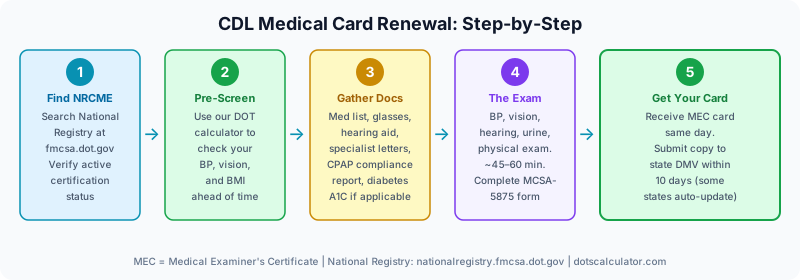
Your CDL medical card has an expiration date, and if it lapses, your CDL downgrades automatically. You can't legally drive a commercial vehicle in interstate commerce until it's current. This isn't the kind of paperwork you want to discover is expired at 4 AM before a run.
Here's the full process, step by step, so you know exactly what to do and when.
Step 1: Know When You Need to Renew
Your Medical Examiner's Certificate shows an expiration date. The standard period is two years, but your certificate may be shorter depending on your health:
- 2 years: Blood pressure below 140/90, no conditions requiring closer monitoring
- 1 year: BP in the 140–159/90–99 range (Stage 1 hypertension)
- 90 days: BP in the 160–179/100–109 range (Stage 2)
- Disqualified: BP 180+/110+ until controlled
Don't wait until the last week. Book your appointment 3–4 weeks before expiration to give yourself time if something comes up, a borderline reading, missing paperwork, or a referral that needs to be resolved before the examiner can certify you.
Not sure which certification period your current health numbers will get you? Run them through the DOT physical eligibility calculator before you book.
Step 2: Find an NRCME-Certified Examiner
This is non-negotiable: your examiner must be listed on the National Registry of Certified Medical Examiners (NRCME). The registry is maintained by FMCSA under 49 CFR 391.43. An exam done by anyone not on the registry is invalid, full stop.
Search at nationalregistry.fmcsa.dot.gov:
- Click "Find a Medical Examiner"
- Enter your zip code and search radius
- The results show every certified provider nearby, name, credential type, address, and phone number
Most certified examiners are nurse practitioners, physician assistants, chiropractors, or physicians. All credential types are equally valid for DOT purposes if they're on the registry.
Call ahead to confirm they're currently accepting DOT physicals, ask about pricing, and book an appointment. Many clinics accept walk-ins for DOT physicals, but an appointment usually means shorter wait times.
Step 3: Know What to Bring
Showing up unprepared is the most common reason drivers leave without a certificate on the first visit. Bring:
Always:
- Government-issued photo ID (driver's license is fine)
- Complete list of your current medications, generic name, dosage, frequency, prescribing doctor, and what condition it treats
- Your glasses or contacts if you need them for vision correction
- Your hearing aids if you use them
If you have specific conditions:
- Sleep apnea: Bring your CPAP compliance report. Examiners look for at least 70% nightly use over the past 30 days. Most CPAP machines generate a report you can print or show on a phone.
- Diabetes: Bring documentation from your treating physician confirming your condition is stable and that you're safe to drive commercially. Insulin-treated diabetes requires a separate FMCSA exemption, see below.
- Heart conditions, seizure history, or other significant medical history: A letter from your specialist clearing you for commercial driving speeds things up considerably.
- Previous 90-day certificate for hypertension: Bring records showing your BP is now controlled.
Don't bring a blood pressure reading from home expecting it to substitute for the on-site measurement. The examiner takes their own reading.
Step 4: What Happens at the Exam
A DOT physical typically takes 30–60 minutes. Here's the sequence:
Medical history form: You'll fill out FMCSA Form MCSA-5875, which covers your health history, medications, surgeries, and symptoms. Answer honestly. Falsifying a federal medical form is a federal offense, and examiners are trained to spot inconsistencies.
Vision test: The examiner checks distance acuity in each eye (must be 20/40 or better, corrected or uncorrected), peripheral vision (70° in the horizontal meridian), and your ability to distinguish traffic signal colors. If you wear glasses or contacts, you'll test with them, and your certificate will be annotated that vision correction is required.
Hearing test: The forced whisper test, you cover one ear and the examiner whispers from 5 feet away. You need to correctly identify the words. An audiometric test can substitute if the whisper test is inconclusive.
Blood pressure and pulse: Taken at rest. The examiner may take two readings with a few minutes between them if the first is borderline. Your result determines your certification period, see the tiers above.
Urinalysis: You provide a urine sample. It's checked for glucose (diabetes indicator) and protein (kidney issues). This is not a drug screen, DOT drug tests are a separate process administered separately.
Physical examination: Heart and lungs, abdomen, spine and musculoskeletal, neurological function. The examiner is looking for anything that might affect your ability to drive safely.
If everything checks out, the examiner completes Form MCSA-5875 and prints your Medical Examiner's Certificate (the wallet card) on the spot. Most drivers leave with their card the same day.
Step 5: What to Do If You Don't Pass
"Not passing" can mean a few different things:
Temporary hold, needs more information: The examiner sees something that requires specialist documentation before they can certify you. This isn't a permanent disqualification. Get the referral completed, provide the records, and come back. The examiner holds their decision open for a reasonable period.
Short-term certificate: You're certified but only for 90 days or 1 year based on your BP stage. Not a failure, you can drive. But use the time to get your numbers to a level that earns you a longer period next time.
Disqualified: Your BP was 180+/110+, or you have a condition that currently disqualifies you under 49 CFR 391.41. You can't drive a CMV in interstate commerce until the condition is treated and controlled. Work with your physician, get the condition addressed, and return for a new exam.
If you feel the examiner's decision was wrong, you have the right to seek a second opinion from a different NRCME-certified examiner. You can also contact FMCSA at 1-800-832-5660 if you believe you were improperly disqualified.
For a detailed look at the conditions that lead to disqualification, read our post on DOT disqualifying conditions.
Step 6: Update Your State DMV
This is the step drivers most often forget. Passing the physical isn't enough, you need to get the information into your state's CDL record.
Under 49 CFR 383.71, CDL holders in the Federal Motor Carrier Safety Administration's medical certification process must:
- Submit a copy of your Medical Examiner's Certificate to your state DMV
- Do this within 15 days of receiving the new certificate
Most states accept this by mail, in-person, or increasingly through an online portal. Check your specific state DMV website for the current submission method.
If you don't update your DMV record within 15 days, your CDL status may downgrade from "certified" to "not certified" in the state system, which can create problems at weigh stations and during roadside inspections.
Some carriers handle this submission for company drivers. Verify whether yours does, or do it yourself to be certain.
How Long Does It Take to Get Your Card?
In most cases, you get the physical wallet card the same day. The examiner prints it during the appointment. There's no waiting period.
The DMV update takes a few business days to show in state records after you submit. If you're asked to show proof during that window, carry your certificate with you, it's valid even before the state system updates.
Insulin-Treated Diabetes: Special Process
If you use insulin to manage diabetes, the standard NRCME process isn't enough. You need an FMCSA diabetes exemption, which requires:
- At least 3 months of stable insulin use with documented glucose logs
- Clearance from your treating endocrinologist
- Application through the FMCSA exemption program
This process takes several weeks. Don't wait until your card is about to expire, start the exemption application well in advance. Read our dedicated post on diabetes and the DOT physical for the full details.
A Note on Certification Periods
Your certification period isn't just a formality, it affects your schedule, your costs, and how often you're off the road dealing with paperwork.
Drivers who consistently qualify for 2-year certificates pay roughly half as much in exam fees over their careers compared to drivers stuck on 1-year cycles. Use the CDL medical certification checker to see where your current health numbers put you before your next appointment. If you're close to a threshold, a few weeks of deliberate preparation can mean the difference between renewing annually or every two years.
For more on what affects certification length, read our post on DOT physical certification periods.
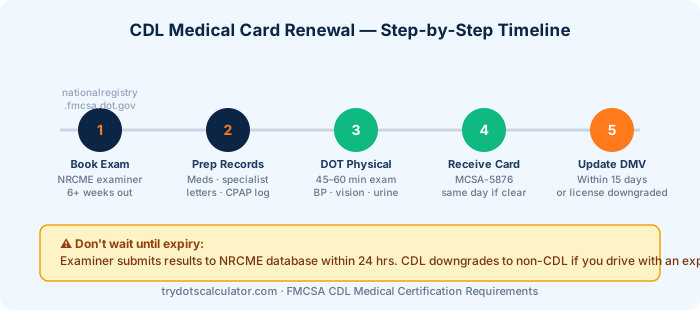
Quick Reference: The Full Renewal Checklist
- [ ] Check your current card's expiration date
- [ ] Book appointment 3–4 weeks before expiration
- [ ] Verify your examiner at nationalregistry.fmcsa.dot.gov
- [ ] Gather medications list, medical records, and any specialist letters
- [ ] Bring glasses/contacts and hearing aids if applicable
- [ ] Attend the exam, vision, hearing, BP, urinalysis, physical
- [ ] Receive your Medical Examiner's Certificate
- [ ] Submit a copy to your state DMV within 15 days
- [ ] Confirm the update appears in your state CDL record
That's the whole process. If you go in prepared, most renewals are done in under an hour. Questions about your specific state's submission deadline or a health condition complicating your renewal? Our contact page is the fastest way to get an answer.