How Much Does a DOT Physical Cost in 2026?
DOT physical costs range from $60 to $150 depending on where you go. Here's what drives the price and how to avoid overpaying.
Quick Answer: A DOT physical costs between $60 and $150 in 2026. Urgent care clinics tend to be at the low end; occupational health centers and private physicians usually charge more. If your employer covers it, verify that before paying out of pocket.
You're due for your DOT physical. You know the drill, find a certified examiner, show up, get checked out, hope your blood pressure cooperates. But depending on where you book, you could pay $65 or $145 for the exact same exam.
That spread matters when you're doing this every one or two years for the length of your career. Let's break down what actually drives the price and where you'll get the best value.
What the Market Looks Like Right Now
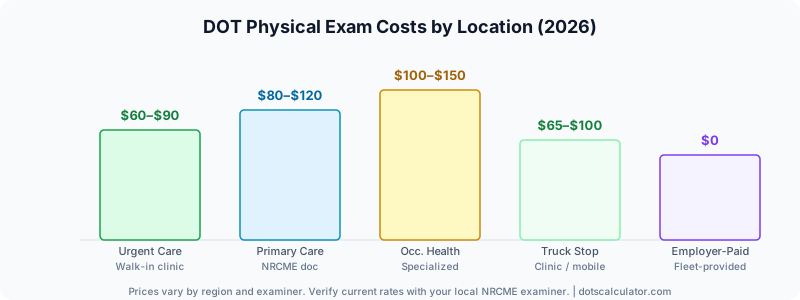
Here's where prices sit across different clinic types in 2026:
- Urgent care chains (FastMed, AFC Urgent Care, similar): $60–$85
- Independent walk-in clinics: $70–$100
- Occupational health clinics: $90–$130
- Private occupational medicine physicians: $110–$150
- Employer-contracted clinics: $0, your carrier covers it
The national average for a driver paying out of pocket is around $95–$110. Prices haven't moved much since 2024, it's a competitive, commoditized exam and the market keeps a lid on price creep.
4 Things That Drive the Price Up or Down
1. Who's Doing the Exam
Every DOT physical examiner must be listed on the National Registry of Certified Medical Examiners (NRCME), that's a federal requirement under 49 CFR 391.43. But the registry doesn't set prices. It just says who's allowed to examine you.
A nurse practitioner working a shift at an urgent care chain carries less overhead than a solo occupational medicine physician with a private practice. Both are qualified under FMCSA rules. The NP at urgent care will almost always be cheaper.
2. Urban vs. Rural
In dense metros, Dallas, Chicago, Phoenix, you might have a dozen certified examiners within 10 miles. Competition keeps prices down. You'll find $65–$85 exams pretty routinely.
In rural areas, you might have one certified examiner within 40 miles. No competition means no price pressure. Expect $100–$135 in thin markets, sometimes more.
3. Whether Your Employer Pays
Many carriers, especially large fleets, cover the cost of your DOT physical entirely. Some reimburse after the fact. Some pay nothing.
Check your employee handbook or ask HR before you book anything. If your company has a deal with a specific clinic, use it. Even if it's less convenient than the place down the street, you're not paying $100 out of your own pocket for something your benefits cover.
Independent owner-operators almost always pay out of pocket. Build roughly $100–$150 into your annual operating budget, or up to $300–$450 per year if your health conditions require more frequent certification.
4. How Often You Need the Exam
The standard certification period is two years for drivers who meet all FMCSA thresholds cleanly. That's one exam every 24 months, manageable.
But the blood pressure tiers change that math significantly:
- BP 140–159/90–99: 1-year certificate, you're paying annually instead of every two years
- BP 160–179/100–109: 90-day certificate, three exams a year at full price
- BP 180+/110+: Disqualified until BP is controlled
A driver paying $100 per exam who's stuck on 90-day cycles pays roughly $300/year just in exam fees. That's $200 more per year than a driver who qualifies for 2-year certification. Over a 15-year career, you're looking at $3,000 in extra exam costs from blood pressure alone.
Use the DOT physical eligibility calculator before your appointment to see which certification tier you're likely to land in based on your current BP readings.
What the Exam Fee Covers
A standard DOT physical under 49 CFR 391.41 includes:
- Blood pressure and pulse
- Vision screening (distance acuity, peripheral field, color recognition)
- Hearing test (forced whisper at 5 feet, or audiometric equivalent)
- Urinalysis, checks glucose and protein, not a drug test
- Physical exam of heart, lungs, spine, abdomen, and neurological function
- Medical history review and medication check
That's the baseline and virtually every clinic rolls it into one flat fee.
What Costs Extra
A few things can add to the bill depending on your situation:
- EKG: Some examiners require one for drivers over 45 or with cardiac history. Adds $25–$60 depending on the clinic.
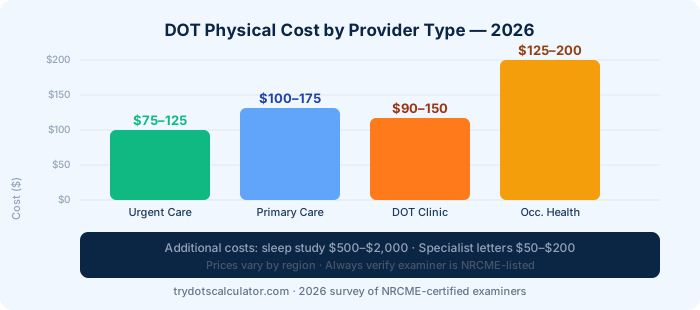
- Sleep study referral: If the examiner flags sleep apnea risk, common with high BMI or neck circumference over 17 inches in men, they may refer you for a formal study. That's billed separately, often $300–$1,500 depending on your insurance.
- Lab work: The standard urinalysis is a dipstick test done in-office. If the examiner orders blood work, like an HbA1c for diabetes screening, expect a separate bill from the lab.
Most healthy drivers pay only the base exam fee and nothing else. These add-ons are the exception.
Finding a Certified Examiner
You can't go to just any doctor. Your examiner must be on the FMCSA's National Registry, searchable at nationalregistry.fmcsa.dot.gov. An exam done by an unregistered provider doesn't count, you won't get a valid Medical Examiner's Certificate.
The registry search is simple: enter your zip code, set a radius, and it returns every certified examiner nearby with contact info. Most have their prices on their clinic website, or you can just call and ask. Takes two minutes.
Don't assume your regular doctor is registered. Many aren't, even if they've been your physician for years. NRCME certification requires specific training and testing that most primary care providers haven't done.
Should You Shop Around?
Yes, but be smart about it. If there are four certified examiners within 20 miles, a quick round of calls to ask pricing takes 10 minutes and could save you $40–$60. That's worth doing.
That said, don't pick the cheapest examiner if they have a reputation for being unnecessarily strict on borderline readings. In trucking, word travels about which clinics are fair and which ones look hard for reasons to fail you. Ask around in your fleet or on trucking forums before you book somewhere new.
If you're borderline on blood pressure, check the tips for lowering BP before your DOT physical first. Showing up with a 137/87 instead of 145/93 can be the difference between a 2-year card and a 1-year card, which saves you an entire exam fee over the next two years.
Employer-Paid Exams: The Fine Print
If your carrier covers the physical, there's usually a condition: you use their approved clinic. That's fine for most situations. But ask explicitly whether a follow-up visit is also covered if you need to come back after getting a condition treated.
Some carriers pay for the initial exam and nothing more. If you fail and need to return once your BP is under control or your paperwork is in order, that second visit may be on you. Know that before you assume you're fully covered.
What to Do If Cost Is a Real Issue
A DOT physical is a cost of doing business in commercial driving, there's no federal assistance program specifically for the exam. But a few options exist if you're in a tight spot:
- Federally Qualified Health Centers (FQHCs): Some have NRCME-certified providers and charge on a sliding scale based on income. Check findahealthcenter.hrsa.gov.
- Union benefits: If you're in the Teamsters or another union, check whether your health benefits include coverage for DOT physicals.
- Negotiate with your carrier: If you're a company driver paying out of pocket, make the case for employer coverage as part of your overall compensation package. It's a reasonable ask.
The Bottom Line
A DOT physical in 2026 costs $60–$150. The biggest variable is where you go, urban urgent care is consistently your best bet for fair pricing. Occupational health specialists cost more but may be worth it if you have a complex medical history that requires careful handling.
Your health numbers, especially blood pressure, matter far more to your total lifetime exam cost than the base fee at any one clinic. Getting your BP into the 2-year certification range doesn't just protect your health. It cuts your exam frequency in half.
For a full walkthrough of what the exam covers and how to get ready, read our DOT physical preparation guide. And before your next appointment, run your current numbers through the DOT physical calculator to see exactly where you stand on every FMCSA threshold.
This site is built for working drivers who want straight answers on FMCSA standards, not generic health advice. If you have a cost question we did not cover, send it over and we will add it to the guide.