BMI and DOT Physicals: What the Weight Guidelines Actually Mean
There's no hard BMI cutoff for CDL drivers, but a BMI over 35 often triggers a sleep apnea screening. Here's what examiners actually look for.
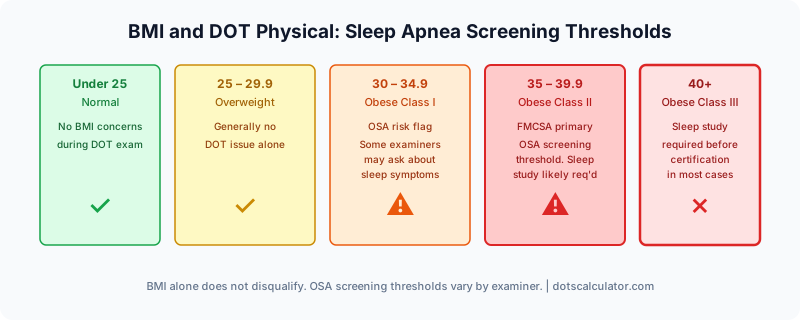
The short answer: The FMCSA has no specific weight or BMI disqualifier, but a BMI of 35 or higher, or certain physical traits like a large neck circumference, can trigger a sleep apnea evaluation that delays or limits your medical certificate. Most BMI-related issues are manageable with the right documentation.
There's No BMI Number That Automatically Fails You
Let's clear this up first, because a lot of drivers have heard otherwise. The FMCSA does not list a maximum BMI or a maximum weight in 49 CFR 391.41. You won't find "BMI over 40 = disqualified" anywhere in the federal regulations.
What the regulations do say is that you must be free from any physical condition that could interfere with safe driving. That's where weight and BMI become relevant, not as a standalone number, but as a factor that connects to other conditions, especially obstructive sleep apnea.
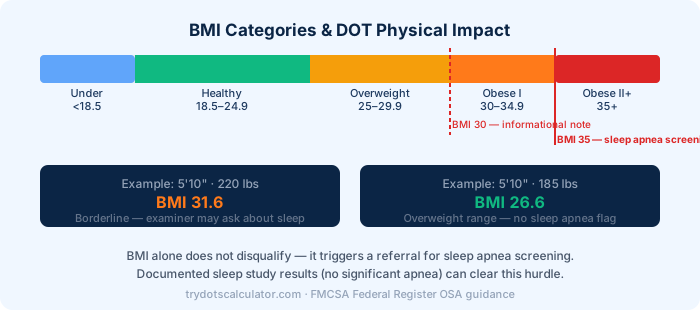
So if a driver comes in at 5'10" and 235 lbs, that's a BMI of 33.7, they're not automatically flagged. But if they also mention excessive daytime sleepiness or their neck circumference is 17.5 inches, the examiner is going to look harder.
How BMI Is Calculated and Why 35 Is the Key Number
BMI is weight in kilograms divided by height in meters squared. For those of us who don't think in metric: take your weight in pounds, divide by your height in inches squared, and multiply by 703.
Some quick reference points:
- 5'8" / 200 lbs = BMI 30.4
- 5'10" / 235 lbs = BMI 33.7
- 6'0" / 260 lbs = BMI 35.3
- 6'2" / 270 lbs = BMI 34.7
- 5'6" / 220 lbs = BMI 35.6
The number 35 comes up in the medical examiner guidance not because of any regulatory bright line, but because research links BMI above 35 with meaningfully higher rates of obstructive sleep apnea. At that threshold, many NRCME-certified examiners follow guidance from the American College of Occupational and Environmental Medicine (ACOEM) that recommends screening before issuing a standard certificate.
Not every examiner applies this the same way, which is one reason drivers sometimes get different outcomes at different clinics. But it's the most common trigger point you'll encounter.
Run your own BMI alongside your blood pressure and vision numbers at the DOT physical calculator before your appointment. It'll show you exactly where you stand across all the FMCSA criteria.
Sleep Apnea: The Real BMI-Related Risk
The concern isn't your weight itself, it's untreated obstructive sleep apnea (OSA). OSA causes repeated breathing interruptions during sleep, which means poor sleep quality, daytime fatigue, and impaired alertness. For a driver operating a 40-ton vehicle, that's a genuine safety issue, and FMCSA knows it.
Studies have found that commercial truck drivers have OSA rates anywhere from 28% to 80% depending on the population studied, compared to around 9–38% in the general adult population. The combination of sedentary work, irregular schedules, and high rates of overweight contributes significantly.
FMCSA guidance says examiners should screen for OSA when they see:
- BMI of 35 or higher
- Neck circumference over 17 inches (men) or 15.5 inches (women)
- Reported symptoms: snoring, witnessed apneas, or excessive daytime sleepiness
- A history of hypertension
Multiple risk factors together make a deferral more likely. If an examiner suspects OSA, they can issue a conditional certificate pending a sleep study, or decline to certify until you get evaluated.
What Happens If You're Referred for a Sleep Study
Getting referred for a sleep study is not a disqualification. It's a hold, a request for more information before the examiner signs off on your certificate.
You'll typically have a polysomnography (PSG) test done at a sleep clinic, usually overnight. Some drivers use home sleep apnea tests (HSAT), which are cheaper and more convenient but may not be accepted by all examiners. Ask the examiner or their medical coordinator what they'll accept.
If the study comes back negative, no OSA, you go back with the results and get certified. If it comes back positive, you'll be treated, typically with CPAP therapy. Once you're on CPAP and using it consistently (typically 70% of nights, for at least 4 hours per night), you can be certified. Most examiners want 30 days of compliance data before they'll issue the certificate.
A single-year certificate is common when OSA is newly diagnosed and treated, the examiner wants to see you back in 12 months to confirm you're still compliant. Once you have a solid CPAP track record, many drivers move to 2-year certs.
For more on what affects your cert length, see our breakdown of DOT physical certification periods.
Neck Circumference Matters More Than Most Drivers Know
BMI gets all the attention, but neck size is actually a stronger independent predictor of sleep apnea than BMI in many studies. The NRCME guidance specifically calls out neck circumference as a screening criterion.
If you're a bigger guy with a 17.5-inch neck but a BMI of 31, you may still get flagged, while a driver with a BMI of 37 and a 15-inch neck might not. This surprises a lot of drivers who came in expecting the conversation to be purely about weight.
The examiner will typically measure your neck circumference with a tape measure during the physical exam. If you're close to the threshold, wearing clothes that allow easy access to that area helps.
Practical Things You Can Actually Do Before Your Exam
If you're running a high BMI and have an exam coming up, here's what matters:
Get evaluated for sleep apnea before your exam if you have symptoms. If you know you snore heavily, wake up feeling exhausted, or your partner has seen you stop breathing at night, go to your doctor now. Walking in with a diagnosed and treated condition is much better than getting deferred on exam day.
Know your CPAP compliance data if you're already on therapy. Most CPAP machines upload to a cloud service (ResMed's MyAir, Philips DreamMapper, etc.). Download your last 30–90 days of data before your appointment. Your examiner will want to see it.
Address blood pressure. High BMI and high blood pressure often travel together. Even if your BMI itself doesn't trigger a deferral, blood pressure in the 140–159 range drops you to a 1-year certificate. See the full DOT blood pressure requirements post for stage-by-stage details.
Don't skip the exam hoping the issue goes away. A lapsed medical card is a CDL disqualifier in itself. If your card expires while you're trying to figure out the sleep apnea situation, you're not legally permitted to drive, and that compounds the problem.
If You're Managing Your Weight
Meaningful weight loss takes time, but even modest changes can shift BMI enough to change your screening picture. Losing 15–20 lbs moves most people one full BMI category. If your exam is 90 days away and you're currently at a BMI of 37, getting to 34 is a realistic target and could change whether you get deferred for a sleep study.
More directly relevant: weight loss consistently reduces OSA severity. For some drivers, losing 10–15% of body weight eliminates the condition entirely without any equipment. That's documented in the clinical literature, not wishful thinking.
Even if you don't lose weight before your exam, showing up with a primary care physician's letter that documents your current health status, stable BP, no daytime sleepiness, no known cardiac issues, demonstrates to the examiner that you're taking your health seriously.
Checking Your Full Picture Before You Walk In
BMI is one piece of the puzzle. The DOT physical also checks blood pressure, vision, hearing, urinalysis, and overall physical fitness. Failing one area means a short-term or no certificate regardless of how well you do on everything else.
Before your appointment, run all your numbers through the CDL medical fitness calculator. It checks your blood pressure stage, flags any BMI-related considerations, and shows what cert length you're likely to qualify for, all based on the actual FMCSA thresholds in 49 CFR 391.41.
Run your BMI, blood pressure, and vision numbers through the DOT physical calculator before your appointment. Knowing where you stand across all three gives you the full picture, not just one data point.
The DOT physical isn't designed to ground healthy drivers, it's designed to catch conditions that genuinely pose a risk on the road. If your BMI is high but you're sleeping well, your blood pressure is controlled, and you don't have OSA symptoms, the exam may go more smoothly than you expect. Prepare, document, and don't wait until the last minute.